
Automotive Finance & Car Ownership Research
In-depth financial analysis, dealership F&I contract teardowns, state sales tax rules, 5-year depreciation benchmarks, and real-world vehicle ownership studies.
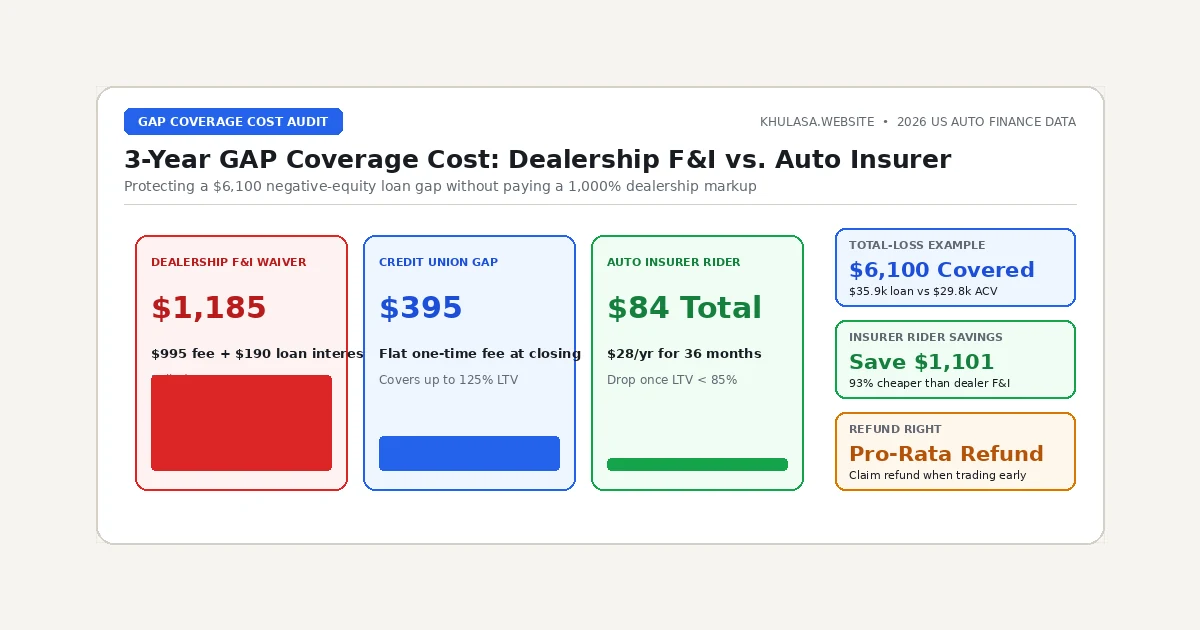
Why Dealerships Charge $995 for GAP Coverage Your Auto Insurer Sells for $28 a Year, and Exactly When You Need It
Guaranteed Asset Protection (GAP) can save a low-down-payment buyer from a $5,850 deficiency bill after a total loss. The mistake is paying a dealership $995+ for coverage your auto insurer sells for $28 a year.
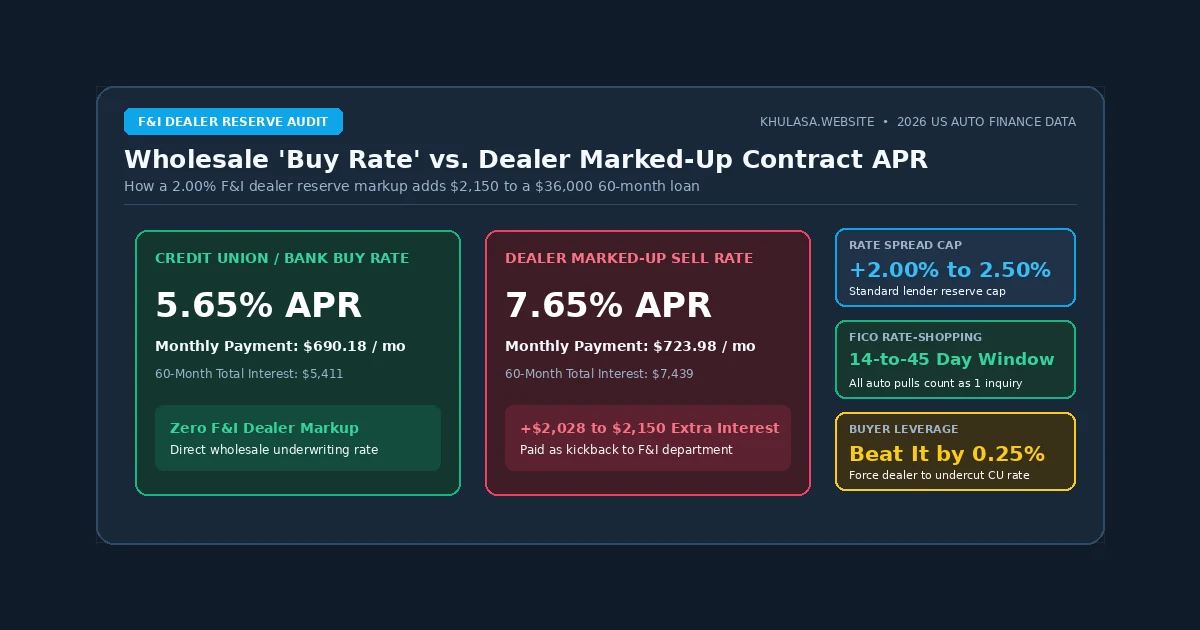
The Two-Point Dealer Reserve Markup: Why Walking Into a Showroom Without a Credit Union Pre-Approval Costs $2,150
When a bank approves your auto loan at a 5.65% wholesale 'buy rate,' indirect lending rules allow the dealership finance manager to quote you 7.65% APR and pocket the $2,150 difference. Here is how to eliminate that markup in 15 minutes.
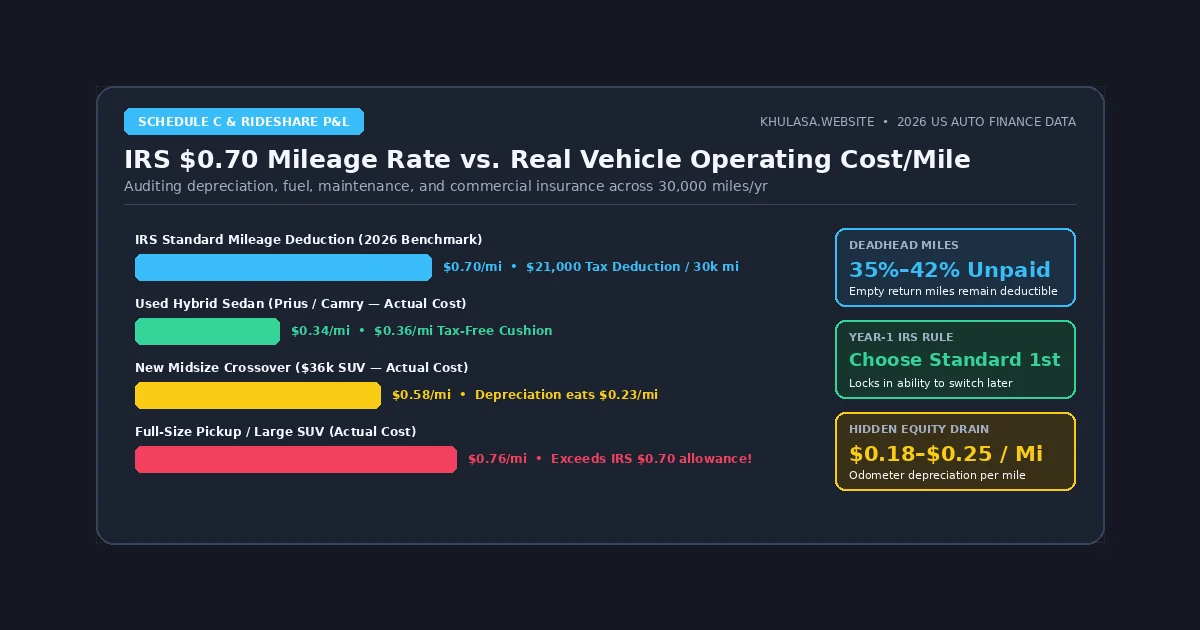
The $0.70 IRS Mileage Deduction vs. Your Car's Real Cost Per Mile: How Rideshare and Self-Employed Drivers Misprice Depreciation
Logging 25,000 business or rideshare miles generates a $17,500 Schedule C tax deduction at the $0.70 IRS mileage rate, while quietly draining $0.31 to $0.67 per mile in real depreciation and running costs.
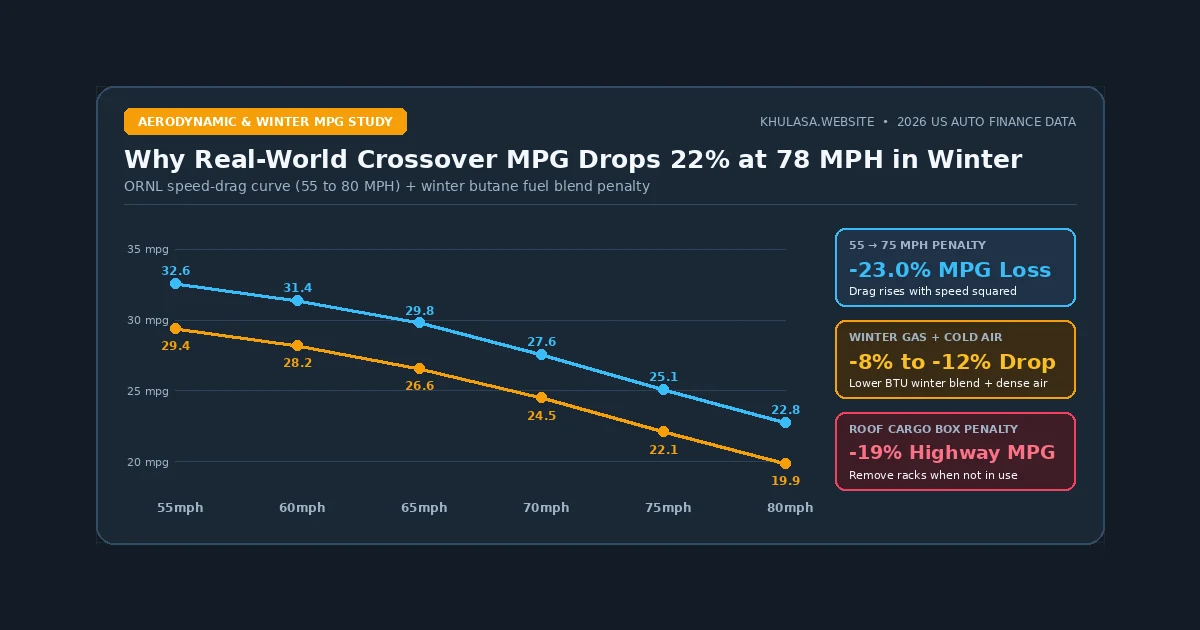
78 MPH on I-80 and Winter-Blend Gas: Why Your SUV's Real-World Fuel Economy Drops 22% Below the Window Sticker
Federal testing rules allow automakers to certify 'Highway' window-sticker MPG at an average speed of just 48.3 mph. Add 78-mph aerodynamic drag and winter butane fuel blends, and real-world SUV fuel economy drops 22% to 24%.
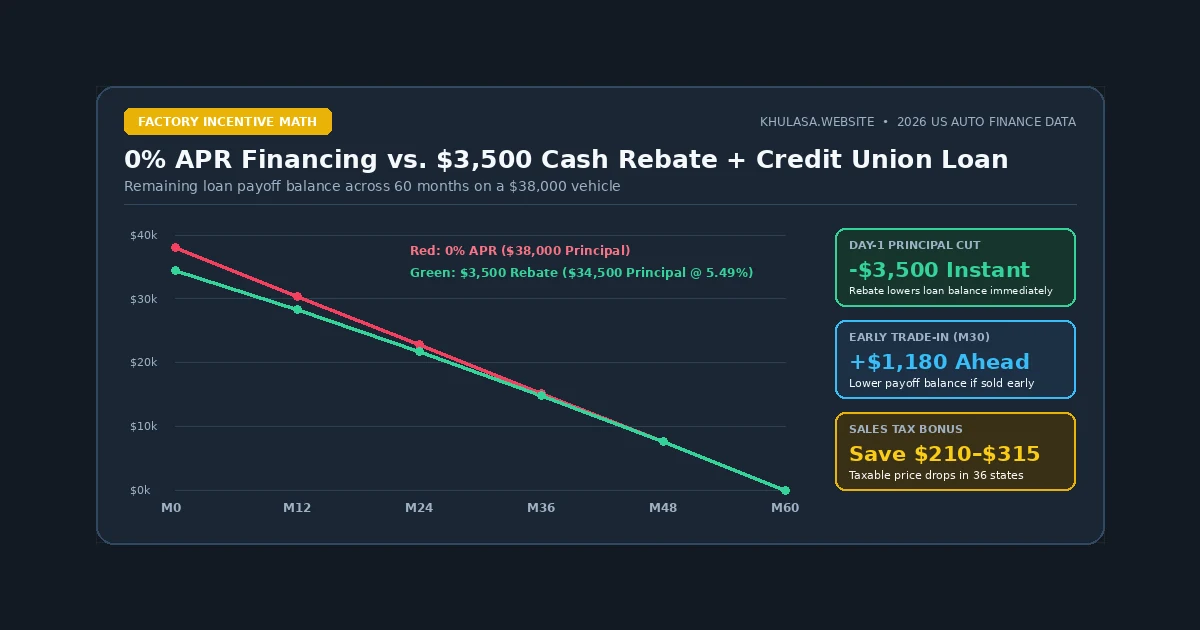
0% APR Financing vs. $3,500 Customer Cash: When Taking the Rebate and a Credit Union Loan Beats 'Free Money'
Does a 0% APR financing offer really beat a $4,000 factory cash rebate paired with a credit union loan? We run the 60-month amortization schedule and show why trading in at Month 30 flips the winner.
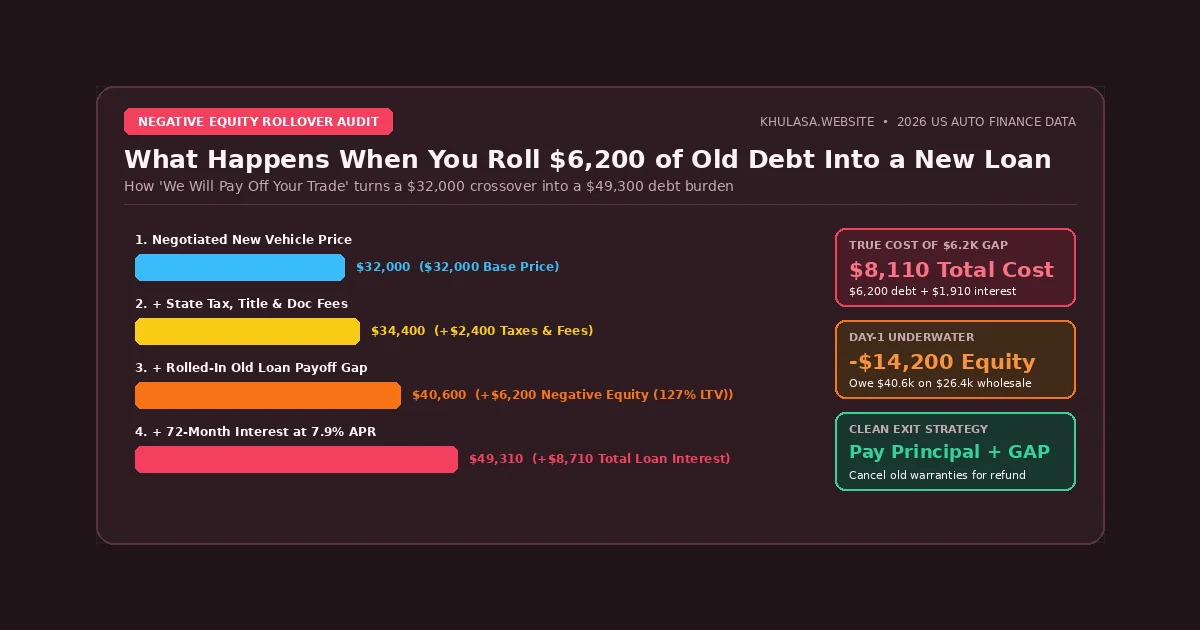
Rolling $6,200 of Old Car Debt Into a New Loan: Why 'We'll Pay Off Your Trade' Costs $8,100 and How to Exit Cleanly
The average underwater trade-in at US dealerships now carries over $6,200 in unpaid debt. When a dealer promises to 'pay off your old loan,' rolling that $6,200 into a new 72-month contract actually costs $8,928.
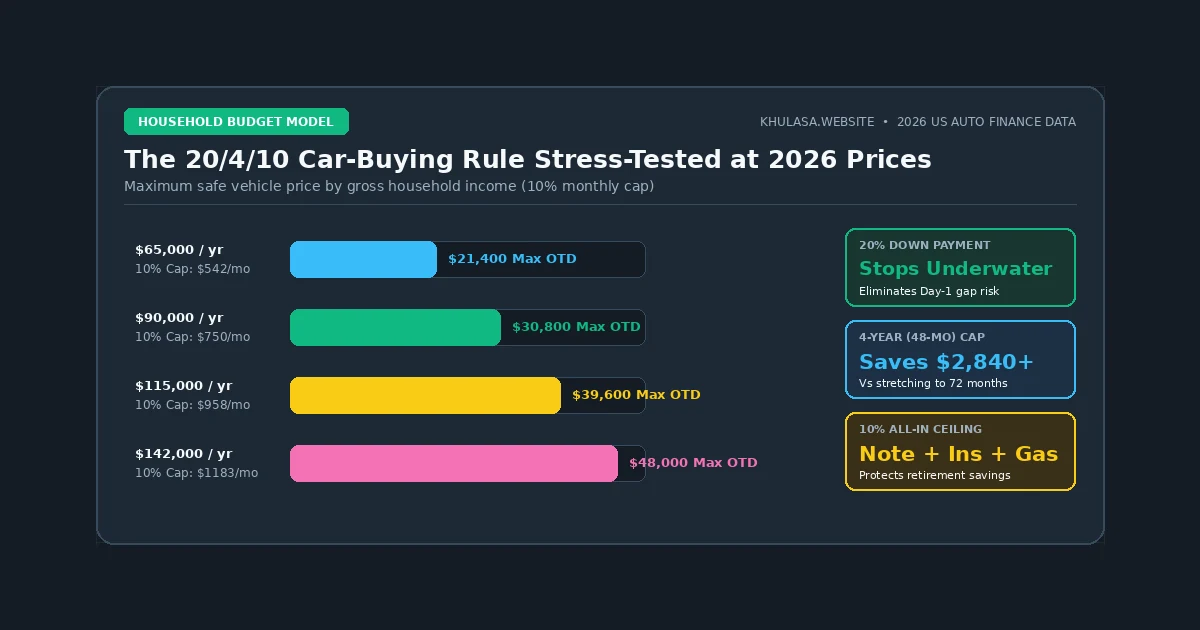
Is the 20/4/10 Car-Buying Rule Dead at $48,000 Average Transaction Prices? Stress-Testing Household Auto Budgets
How much household income does it actually take to buy an average $48,000 new car under the classic 20/4/10 rule? At 6.35% APR, strict compliance demands $147,366 a year. Here is how to calibrate your budget without going car-poor.
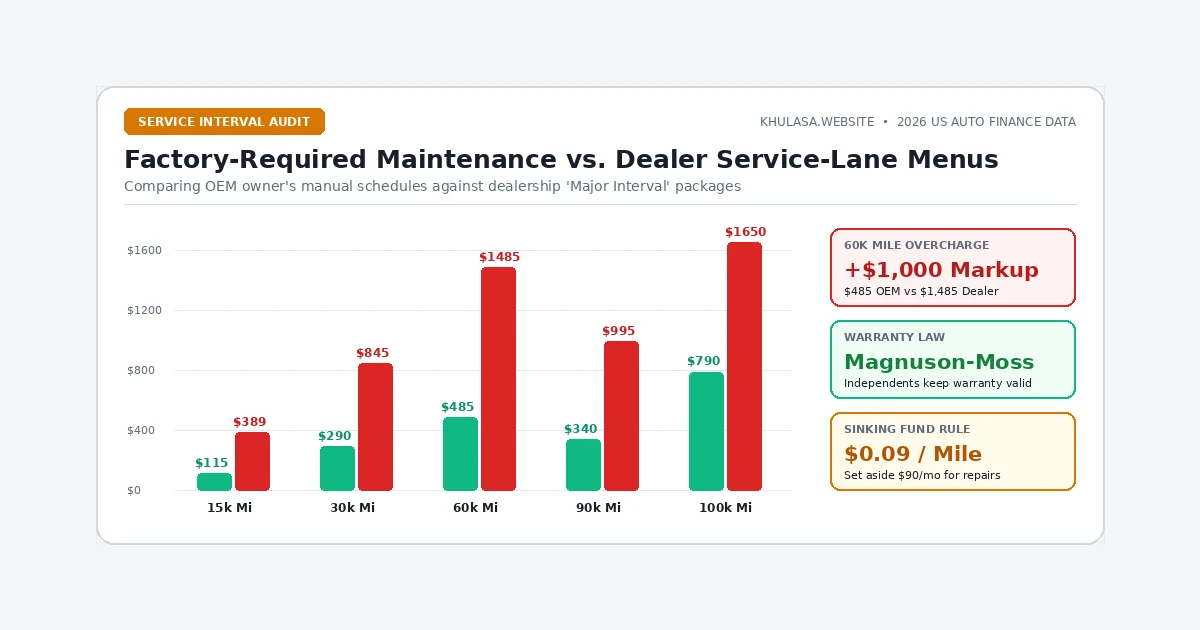
The 60,000-Mile Service Cliff: Separating Factory-Required Maintenance From Dealership Service-Lane Upsells
A dealership's laminated '60,000-Mile Major Service Menu' often quotes $1,485, yet half the items on that sheet never appear in your factory owner's manual. Here is how to audit service intervals and cut repair bills in half.
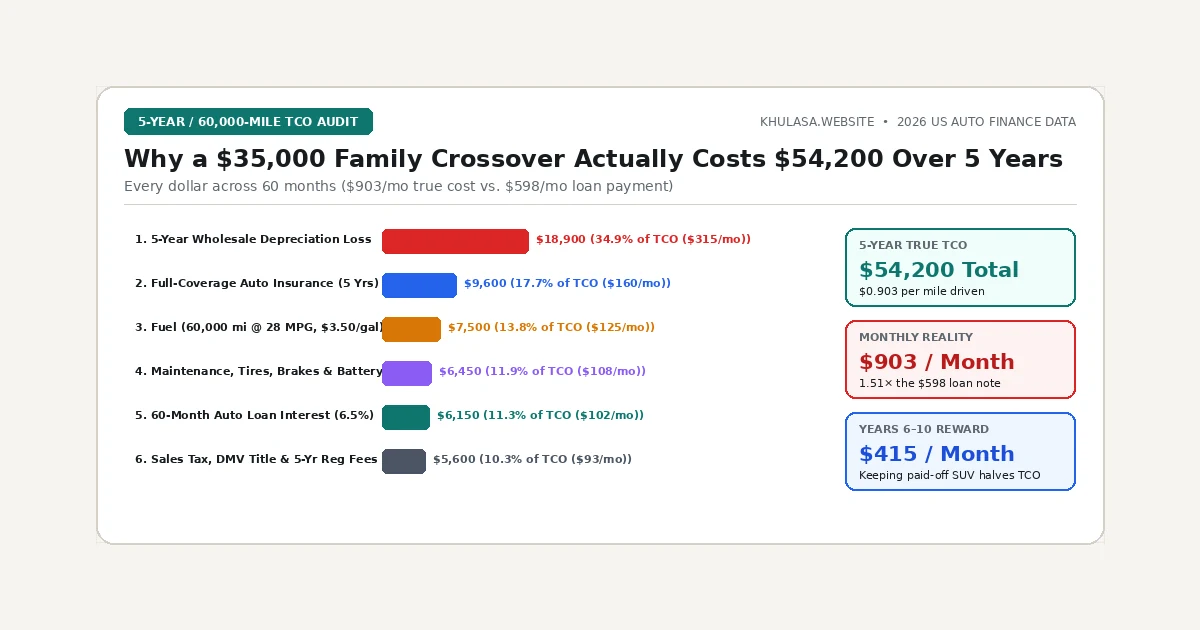
The $35,000 Crossover That Costs $54,200: Auditing Five Years of Hidden Ownership Expenses on a Mainstream Family SUV
A household buying a $35,000 AWD crossover often budgets around the $653 monthly loan payment. When you track every dollar across five years and 60,000 miles, net economic Total Cost of Ownership hits $47,367 ($789/mo).
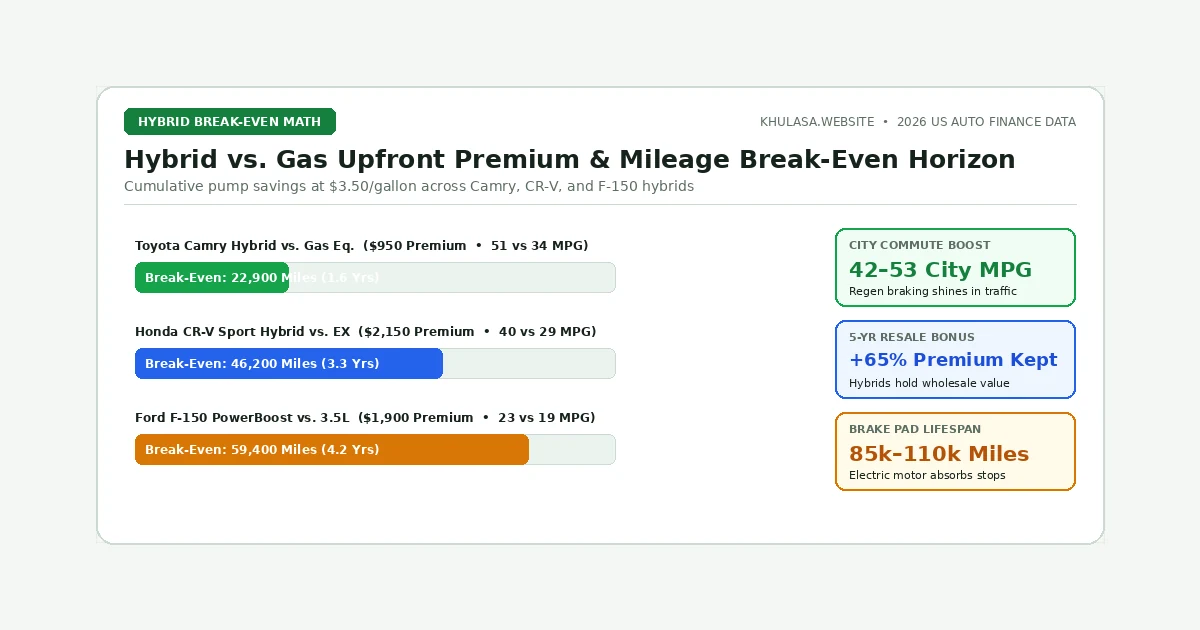
Hybrid vs. Gas Break-Even Math: How Many Miles It Really Takes to Earn Back the Upfront Premium on a Camry, CR-V, and F-150
A 2026 Honda CR-V Sport Hybrid costs $2,150 more upfront than a gas CR-V EX while boosting combined fuel economy from 29 MPG to 37–40 MPG. Here is the exact mileage break-even table across five top models.
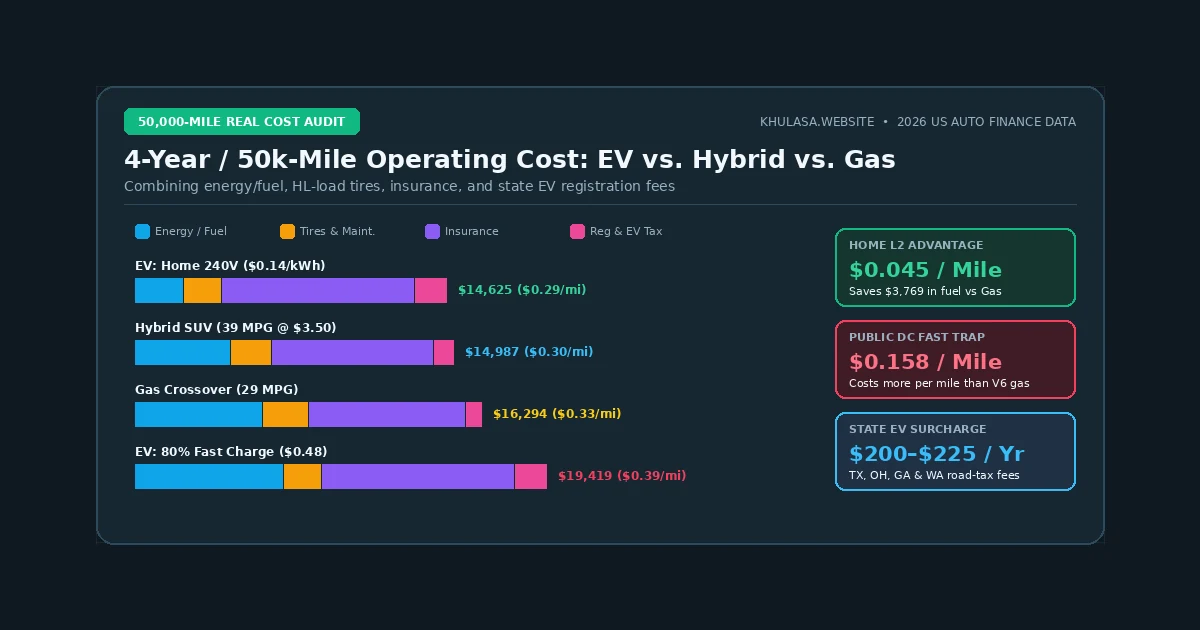
EV vs. Gas After 50,000 Miles: What $0.48 Fast Chargers, HL-Load Tires, and State Registration Surcharges Actually Do to Your Savings
Charging an EV at home on a 240V outlet at $0.14/kWh saves nearly $3,800 in fuel over 50,000 miles. Relying on $0.48 public fast chargers while paying $1,380 for HL-load tires, higher insurance, and $200+ state EV registration surcharges flips those savings upside down.
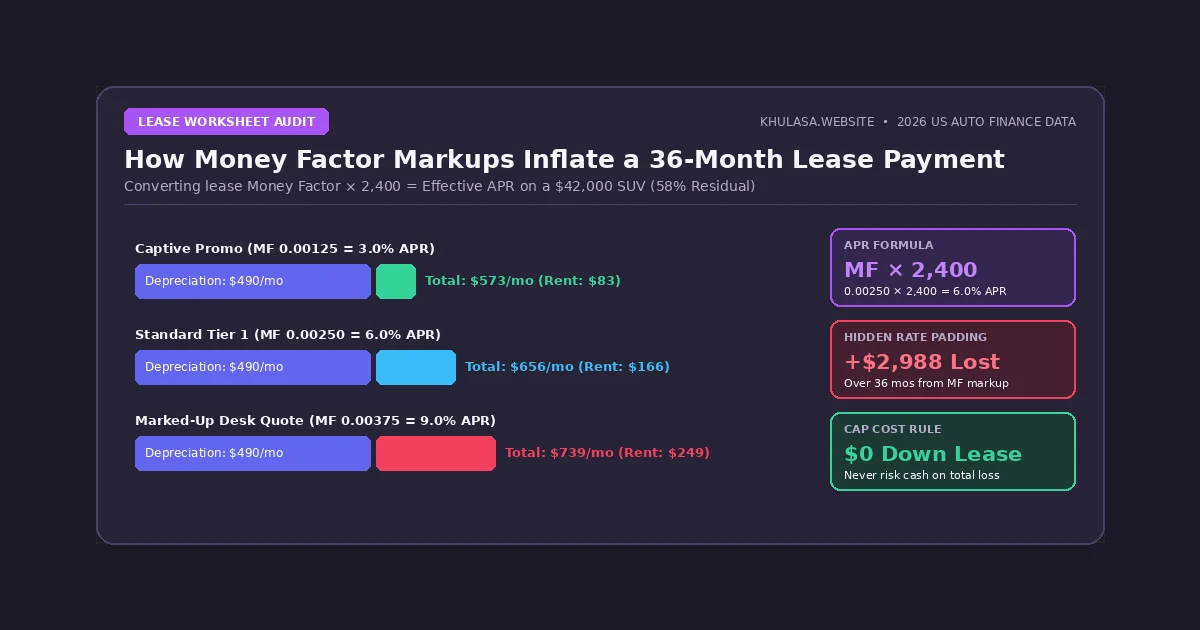
Decoding the Lease Worksheet: Money Factors, Inflated Residuals, and Why $4,000 Down on a Lease Can Vanish Overnight
Federal law does not require car leases to print an APR on the contract. Instead, dealers quote a decimal Money Factor that can disguise 9% interest rates. Here is how to audit every line of a lease worksheet.
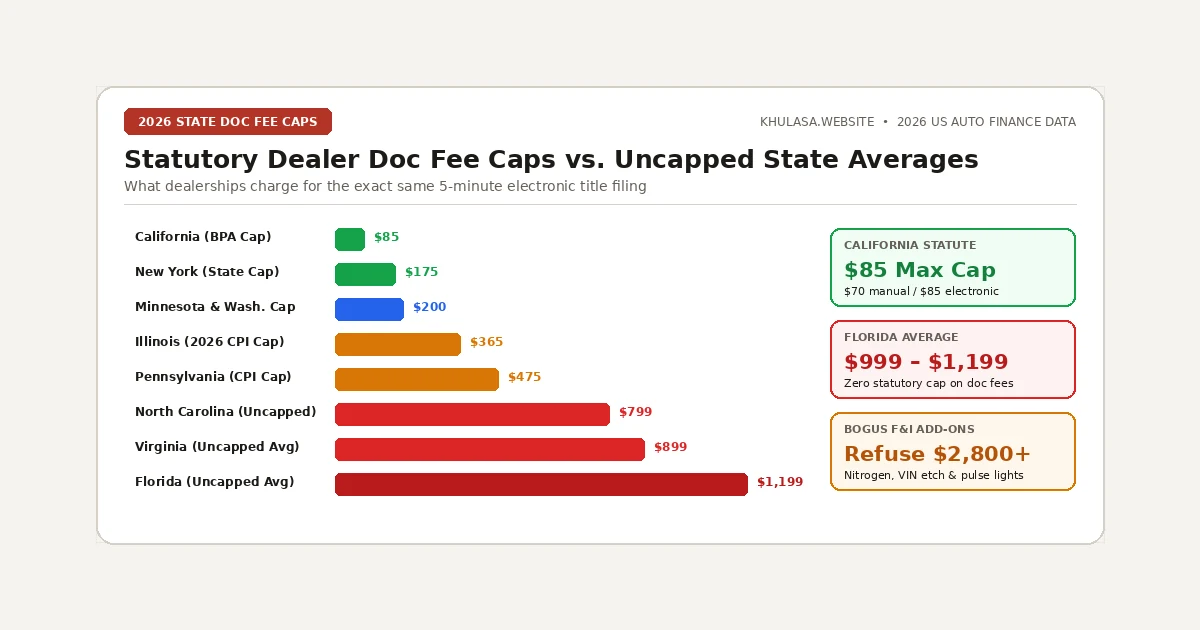
From California's $85 Cap to Florida's $1,199 'Doc Fee': A Finance Manager's Playbook on Dealership Add-Ons
Last month, we audited three buyer's orders where the exact same five-minute electronic title filing cost $85 in California, $175 in New York, and $1,199 in Florida. Here are the 2026 state doc fee caps and how to strip bogus add-ons off your contract.
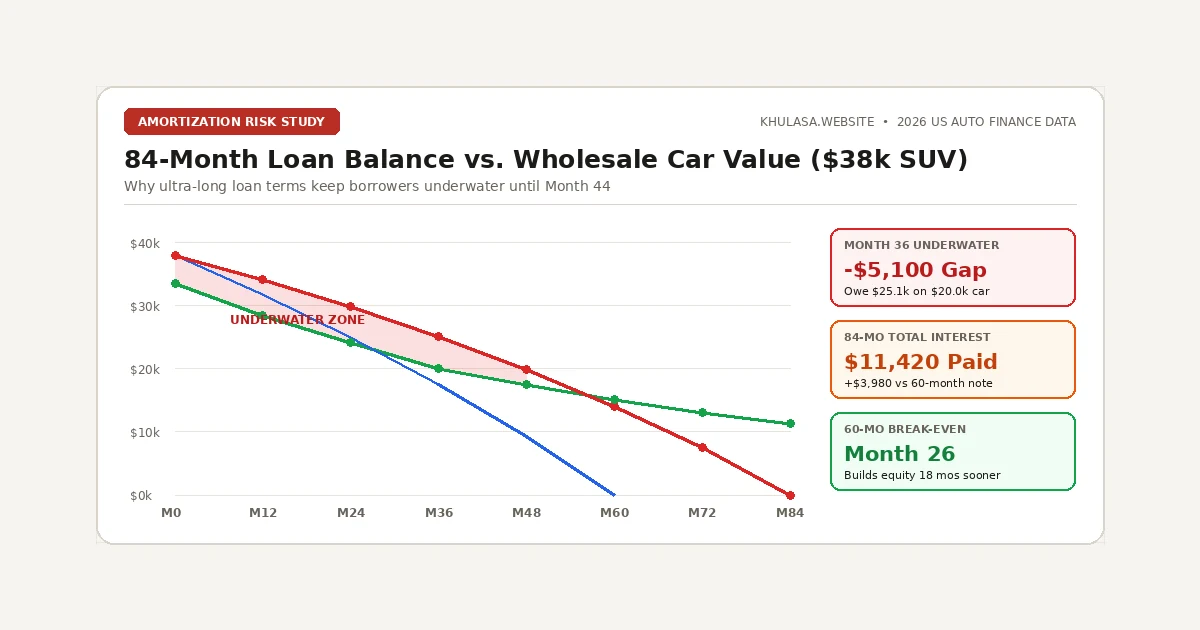
Inside the 84-Month Auto Loan Trap: How Stretching a $38,000 Crossover Note Keeps You Underwater for Four Years
More than 68% of new-car loans now stretch between 72 and 84 months. While an 84-month note trims $156 off a monthly payment, it adds $4,511 in interest and traps buyers underwater for 41 straight months.
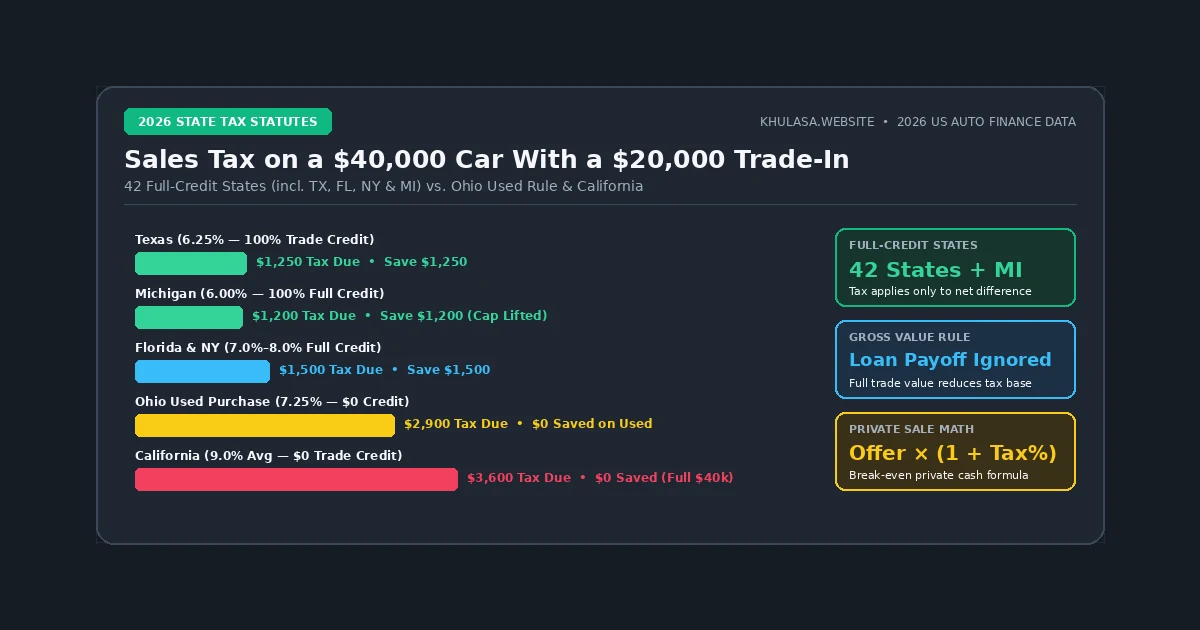
The $1,400 Trade-In Tax Credit: Why Texas and Florida Buyers Save While Californians Pay Full Freight
In 42+ US states (including Texas, Florida, New York, and now Michigan after its motor-vehicle cap phase-out), trading in a $20,000 car toward a $40,000 purchase cuts your taxable price in half. Here is the 2026 state-by-state tax guide.
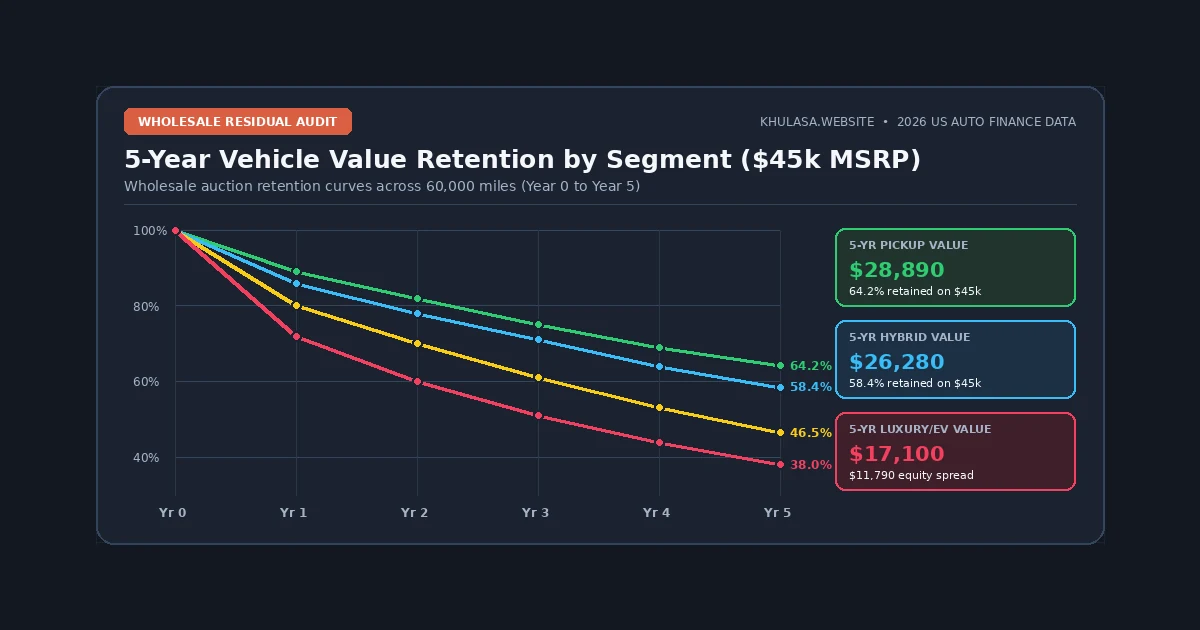
Where Does $22,000 Go? Tracking Five-Year Wholesale Depreciation Across Pickups, Hybrids, Luxury Sedans, and EVs
Why do two $45,000 vehicles bought on the same Saturday return wholesale checks that differ by $12,150 five years later? We track five-year auction residual curves across pickups, hybrids, luxury sedans, and EVs.